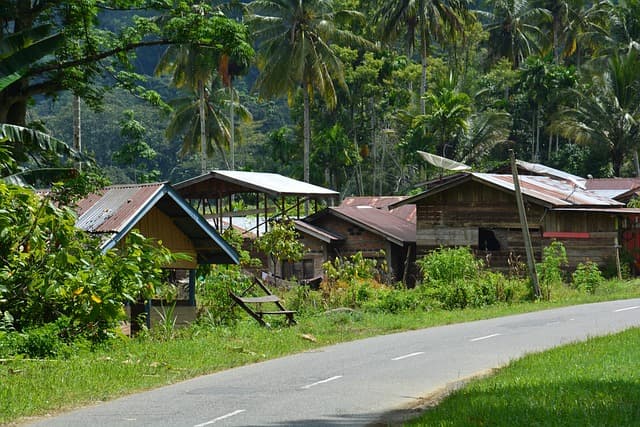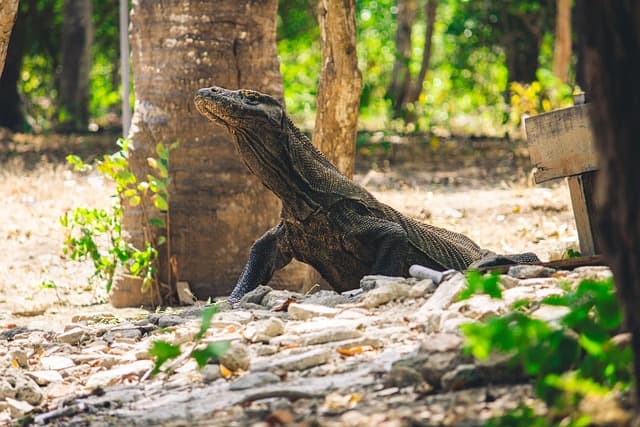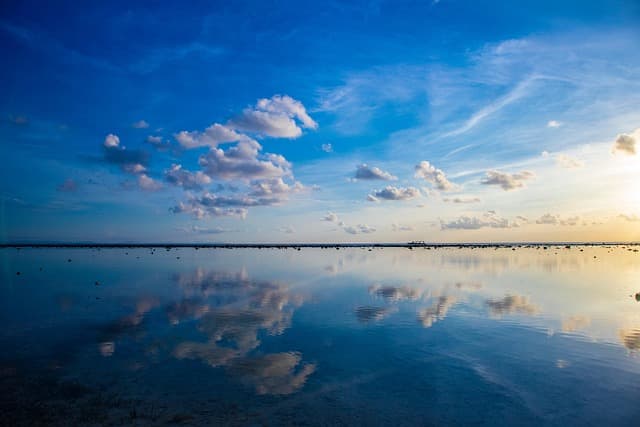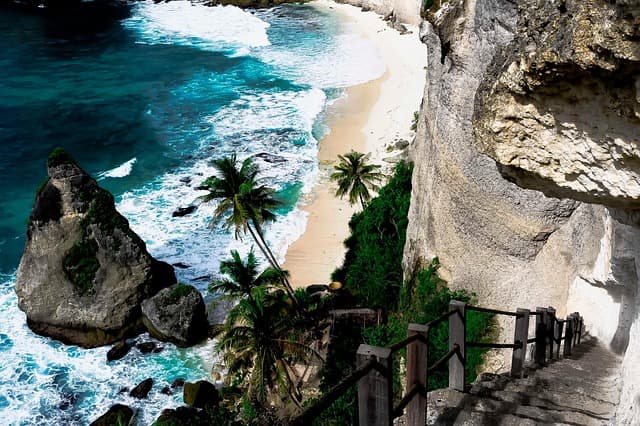
Java is the historical and cultural center of Indonesia and one of the most amazing islands in the world. Only here, literally at every turn, can you encounter active volcanoes, and the picturesque landscapes of the calderas resemble scenes from science fiction films about space.
The lives of the Javanese are governed by volcanoes. They can fertilize the soil with ash or destroy cities with lava. Extreme tourists travel to Java to climb to the crater and see the raging underground elements with their own eyes. Here, you can feel like you are in hell by visiting the shore of an acidic lake near sulfur deposits that burn with blue fire at night. And you can find yourself in a real paradise by going to the beaches of Pangandaran. You can also see magnificent ancient temples, wander through virgin jungles, and explore canyons and caves. Even seasoned travelers are breathless from the vivid impressions that this unusual island offers.
Geography of Java
One of the largest islands in Indonesia is the most densely populated in the world, with a population of about 140 million people. It is almost 1,000 km long and 210 km wide at its widest point. To the west of Java is Sumatra, to the east is Bali, to the north is Borneo, and to the south is Christmas Island.
30 of the 120 volcanoes located on the island are active. The highest of them is Semeru, and the most active is Merapi. Deposits of manganese ore, gold, sulfur, and phosphates have been discovered in the region. Thanks to volcanic ash, Java’s rice fields are among the richest in the world. Arabica coffee is grown on the Ijen Plateau. Five major rivers flow through the island: Solo, Citarum, Brantas, Serayu, and Cimanuk.
Cities and resorts of Java
Jakarta. The capital and most populous city of Indonesia is a paradise for shopping enthusiasts. Huge shopping centers offer goods from global and local brands at affordable prices. In your free time, we recommend visiting the History, Banking, and Maritime Museums, the Jingwu Temple in Chinatown, and Taman Mini Indonesia Indah (Mini Indonesia Park). Children will enjoy the Ancol Dreamland amusement park and Ragunan Zoo.
Yogyakarta. The main attractions of Indonesia’s cultural capital can be easily explored on foot. The Kraton palace complex introduces tourists to the life of monarchs. Nearby is the Taman Sari water castle, the sultan’s favorite place to relax. The Sonobudoyo Museum exhibition illustrates the cultural and historical heritage of Java. At the Pasar Burung bird market, you can see dozens of species of animals and birds.
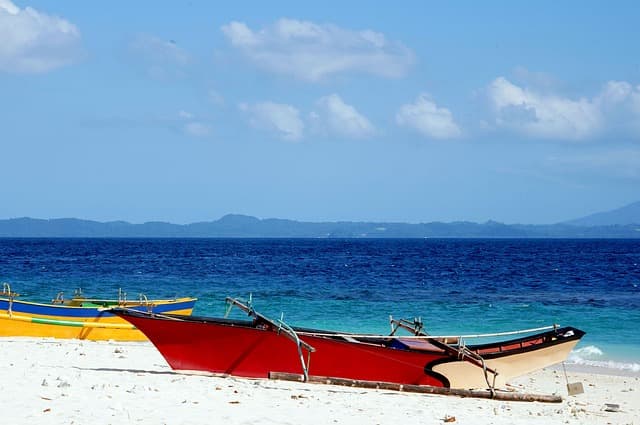
Pangandaran. Located on the southern coast of the island, this town has become a popular resort thanks to its excellent surfing beach. The Taman Nasional Pangandaran National Park is located in its vicinity. It is home to a large population of monkeys, including Javan gibbons, as well as many rare birds. There is a beautiful sandy beach within the reserve.
Bandung. The local name is Kota Kembang (“Flower City”). It is surrounded by tea plantations and volcanoes. Here you can simply walk around and see the architectural monuments — Villa Isola, the Savoy Hotel, the Dutch East India Company building, Chinese pagodas, and the Cipaganti Mosque. Guides offer excursions to the Tangkuban Perahu volcano.
Surabaya. The capital of East Java province and the second largest city in Indonesia. It is home to the country’s largest bridge, Suramadu, connecting Java with the island of Madura, and the largest zoo in Asia, Surabaya Zoo. History buffs will be interested in the Ampel (Sunan Ampel’s Tomb) and Al-Akbar mosques, the Gereja Kelahiran church, and the House of Sampoerna museum. In the center of Surabaya, there is a Soviet submarine (Monument Kapal Selam), which has been turned into a museum exhibit.
Semarang. The city’s architectural appearance harmoniously combines medieval colonial buildings and modern structures. An excellent view opens up from the observation tower, which stands next to the luxurious Masjid Agung mosque. Tourists are advised to visit Gedung Lawang Sewu (“Thousand Doors”) — the former headquarters of the Dutch East India Railway Company. An interesting collection of archaeological exhibits is on display at the Purbakala Museum. While strolling through Taman Djamoe Indonesia Park, you can admire the landscape compositions and rare plants.
Sights of Java
Unspoiled nature, active volcanoes, grandiose temples, luxurious palaces, and ancient cities — Java offers tourists a kaleidoscope of vivid impressions. To see all the most interesting things, it is best to make a list of attractions in advance.
The best time to travel to Java
The island’s climate is tropical, hot, and humid throughout the year. The average temperature is +22-29°C. The south coast is cooler than the rest of the territory. In the mountainous areas, the thermometer stays at +22°C, but during the dry season it can drop below zero. The rainy season lasts from November to March, but most of the precipitation falls in January and February. It is better to go to Java during the dry season, from April to October, when the weather is mostly sunny.
In December, at the foot of Mount Bromo, the Kasada Festival is held in honor of the god Betoro Bromo. At midnight, local farmers climb to the crater and, reciting prayers, throw offerings into it: vegetables, fruits, poultry, and sometimes even ox carcasses.
In early March, Jakarta hosts one of the world’s largest jazz festivals, the Jakarta International Java Jazz Festival. Music groups from different countries come together for this event.
In mid-April, the city of Solo becomes the venue for the grand Batik Solo Carnival. Its program includes ethnic dances, a costume parade, and a beauty contest.
One of the biggest holidays is the birthday of the Prophet Muhammad (Maulid Nabi). It falls on different days of the Gregorian calendar each year. The costume parade held in honor of this holiday in Yogyakarta is impressive and spectacular.